Small Lot Development
Multifamily Residential Development
New Construction 5,500 SF
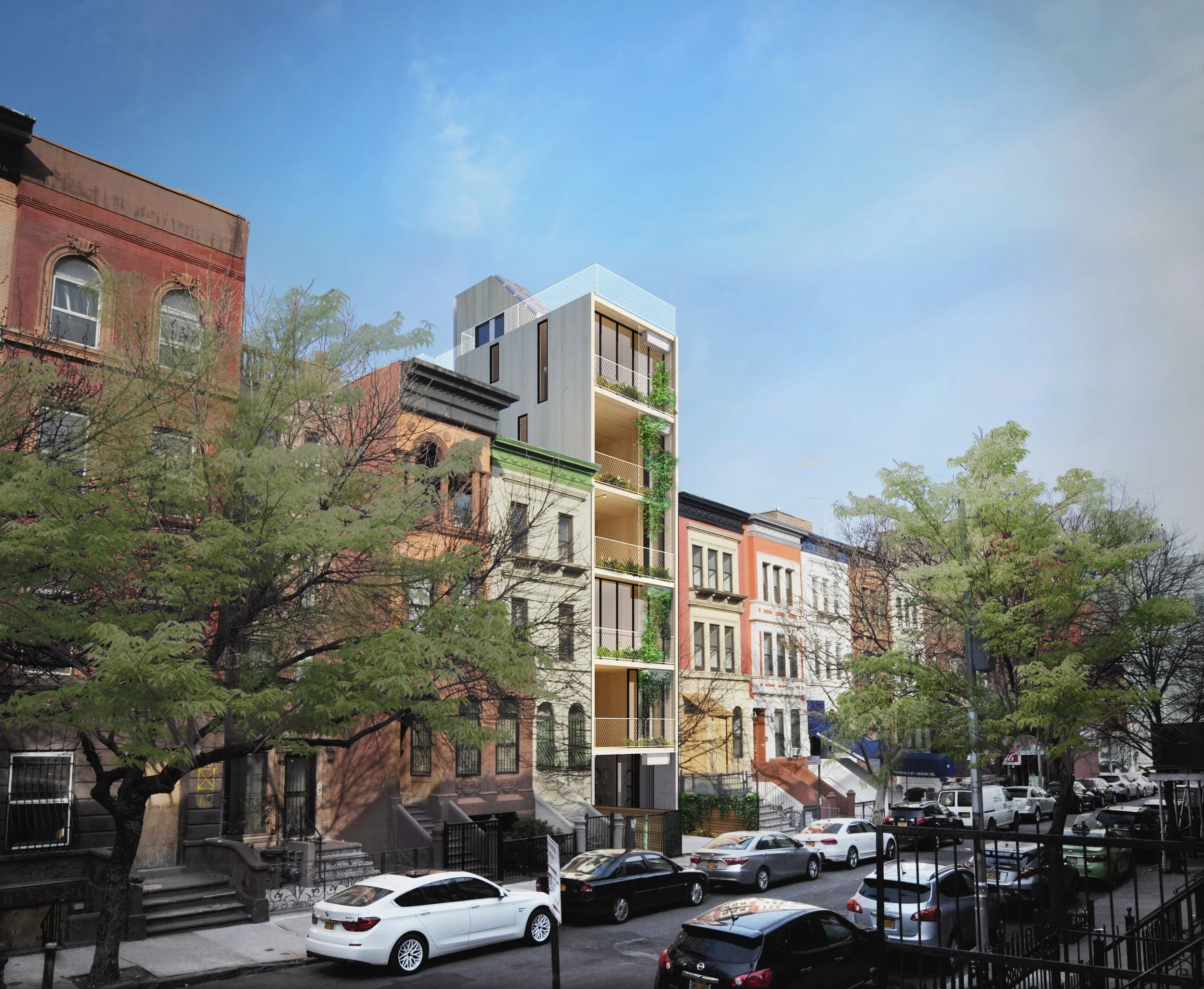
This project was part of the Big Ideas Small Lots international competition sponsored by NYC department of housing and urban development to provide prototype solutions to building on existing small lots owned by New York City. Using an actual site in Harlem owned by the city, the project sought solutions that could be replicated throughout the city on different small lots of various zoning densities. The project was selected as a finalist and awaits city funding for construction of a prototype.
Our design proposal focused on creating a toolkit of practical and sustainable solutions to the reach a goal of creating additional affordable housing units on the difficult sites in new york city. Our design is focused on 5 core ideas.
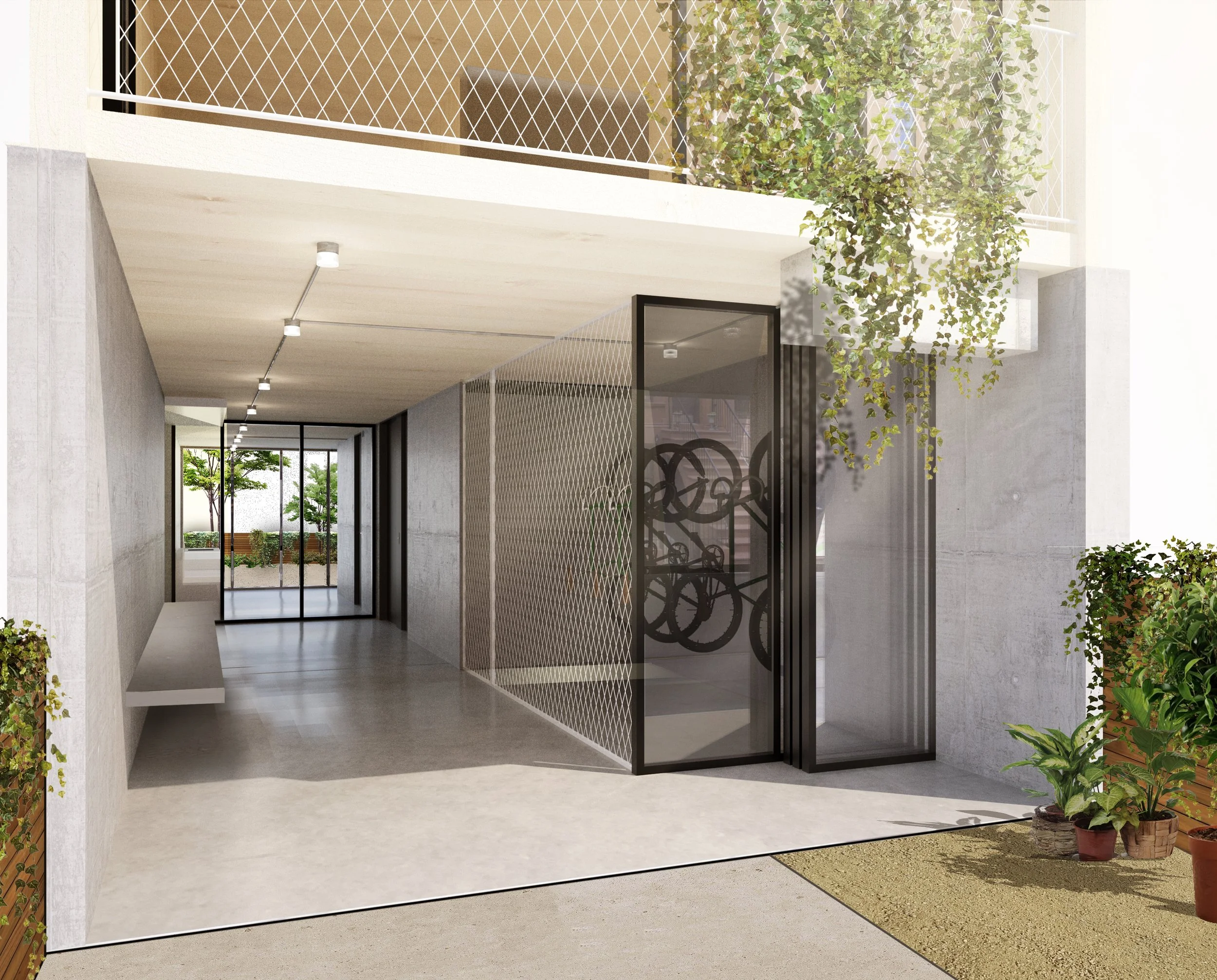
1. Shared Ground Floor Space: By introducing a common ground floor area we proposed a shared space for community uses that kept the read yard as a community garden and the ground floor available for flexible use for for bike parking, a community kitchen and recreation space.
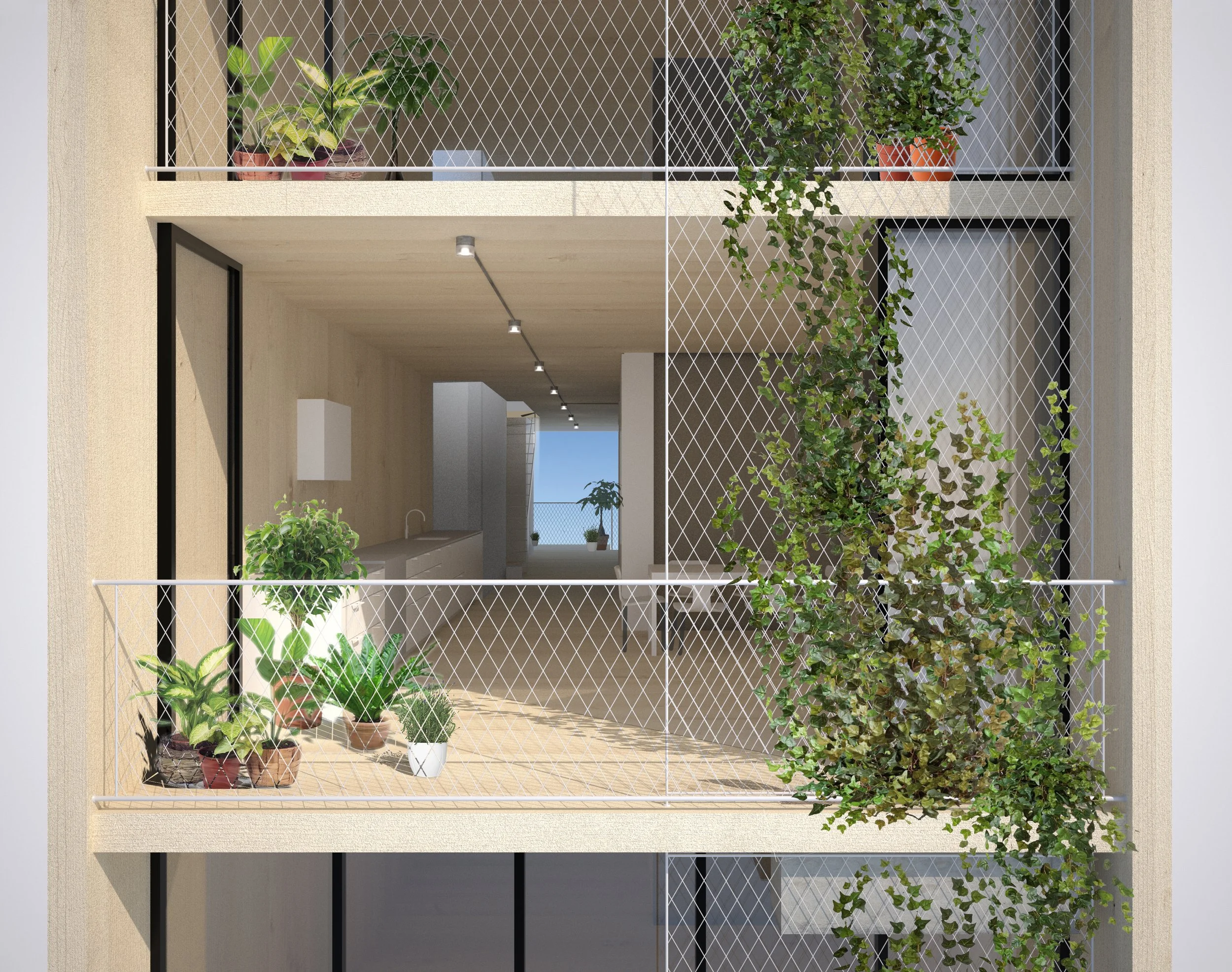
2. Cross Ventilation and maximize access to Light and Air: Our design for the residential units focuses on maximizing the creation of fully open floor plans connected through the unit from the street side to the rear yard taking advantage of natural cross ventilation and southern solar heat gain to each unit.
3. Mass Timber Construction: Our design proposes the use of Mass Timber as the main structural system for the overall building above the concrete ground floor level to take advantage of the repetition and modularity of mass timber prefabrication.
4. Landscape Gardens: Our design proposes the introduction of landscape into the units by integrating full length porches for every unit with integrated planters and growing trellis. These elements will provide solar shading and allow space planting opportunities at each unit.
5. Flexible Unit Layouts: Our proposal allows for a variety of mixed unit types based on the needs of the residents in the building to address the replicability goals. Our project is designed to be readily adaptable to other small lots throughout the city.
The project was designed in collaboration with Jeremiah Joseph/Anawan 101
-
![]()
Construction diagram
-
![]()
Floor Plans
-
![]()
Building Section


